What is happening in The Last Supper?
The scene focuses on the announcement that one of the apostles will betray Jesus. Leonardo turns that moment into different reactions: questioning, surprise, withdrawal and conversation.
Rather than reading every figure separately, compare the calm central figure with the movement around him. Ask where each person looks and whose gesture they seem to answer.
The Last Supper painting with names: who is who?
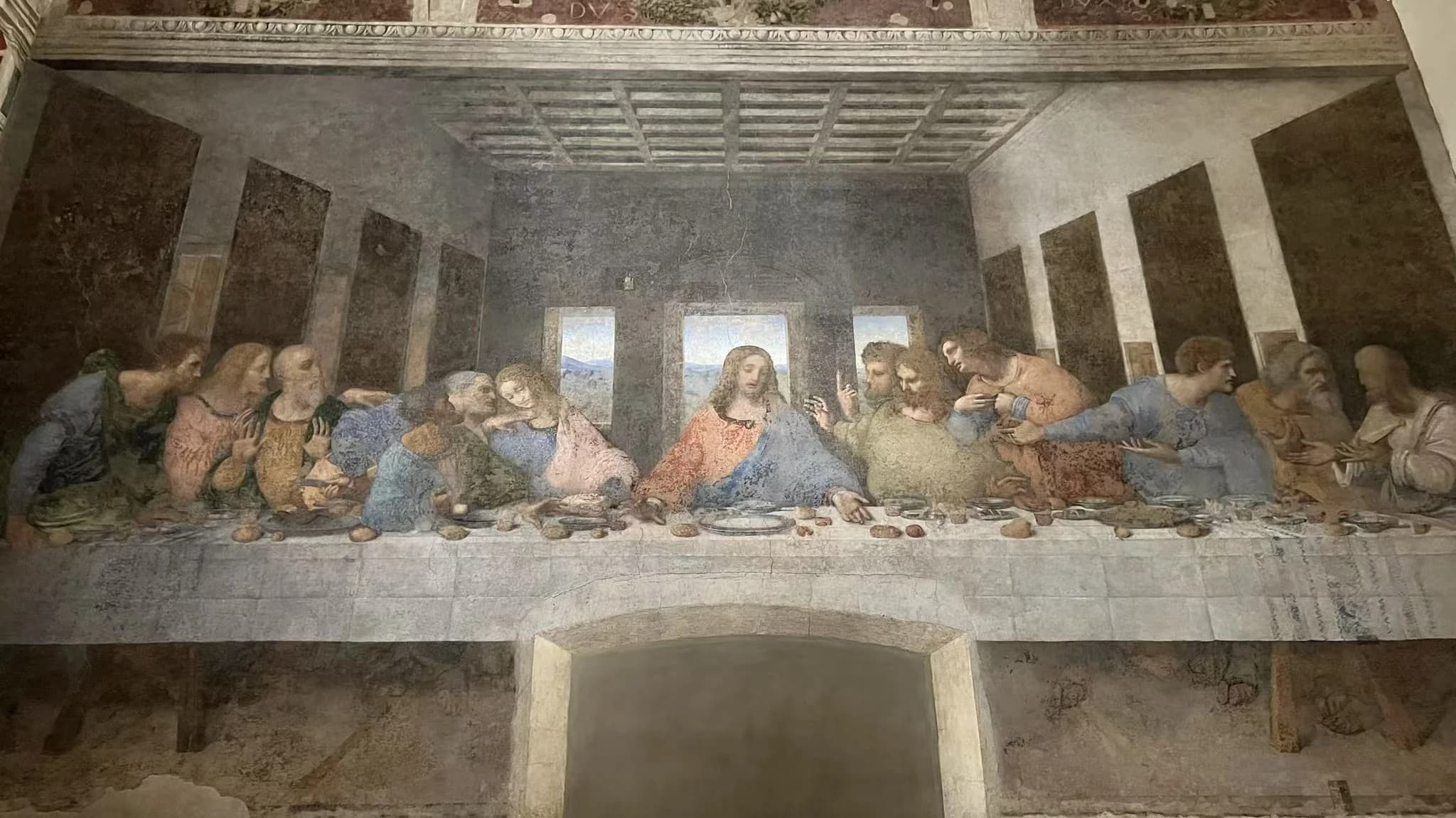
First group on the left
Bartholomew, James the Less, Andrew
Compare the forward lean, outstretched arm and raised palms.
Second group on the left
Peter, Judas Iscariot, John
Peter leans from behind; Judas sits forward; John is nearest Jesus.
At the centre
Jesus
The quiet centre contrasts with the movement on either side.
First group on the right
Thomas, James the Greater, Philip
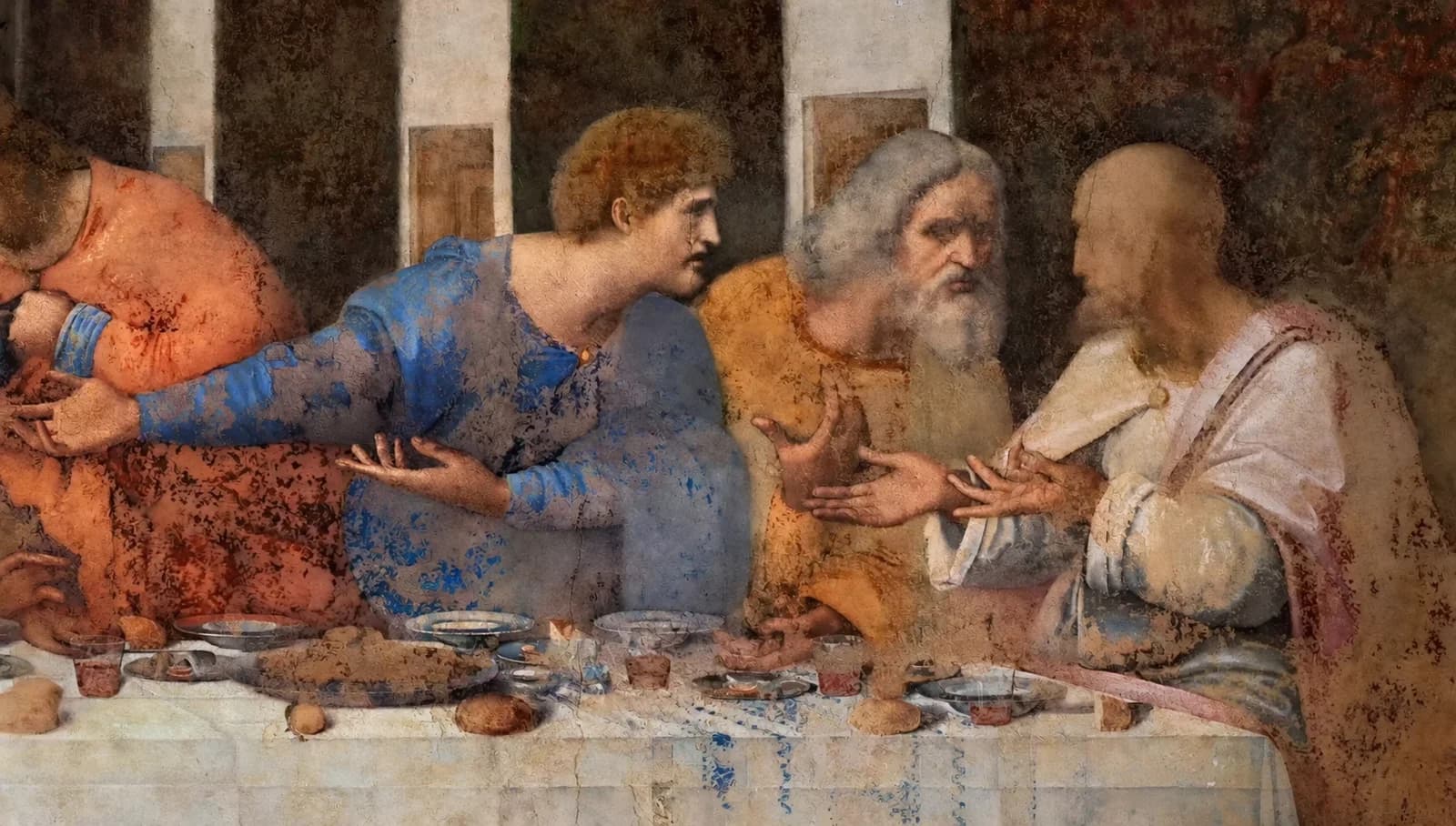
Look from the raised finger to the open arms and hands at the chest.
Second group on the right
Matthew, Jude Thaddeus, Simon
Follow the gazes and gestures between these three figures.
The diagram groups the figures as you face the painting. Peter and Judas overlap, so their positions are easier to understand from the grouped legend than from a single left-to-right list. The names follow the museum’s illustrated leaflet.
See the museum’s illustrated leaflet (English PDF) ↗Where is Judas? Where is John?
On the viewer’s left of Jesus, find the close group with Peter leaning towards John. Judas Iscariot sits forward in the same group, lower and darker than the figures behind him; do not confuse him with Jude Thaddeus at the other end.
John is the youthful figure nearest Jesus on this side. At the far right, Matthew, Jude Thaddeus and Simon continue the exchange through their hands and turned bodies.
The meaning behind the composition and gestures
Follow the ceiling and side-wall lines towards the centre. The painted room appears to continue the real refectory, while the bright opening behind Jesus helps separate the still central figure from the movement around him.
Look at the four clusters of three apostles. A raised hand or a turned shoulder carries your eye between neighbours, giving a large wall painting a rhythm you can read from across the room.
A mural made for this room
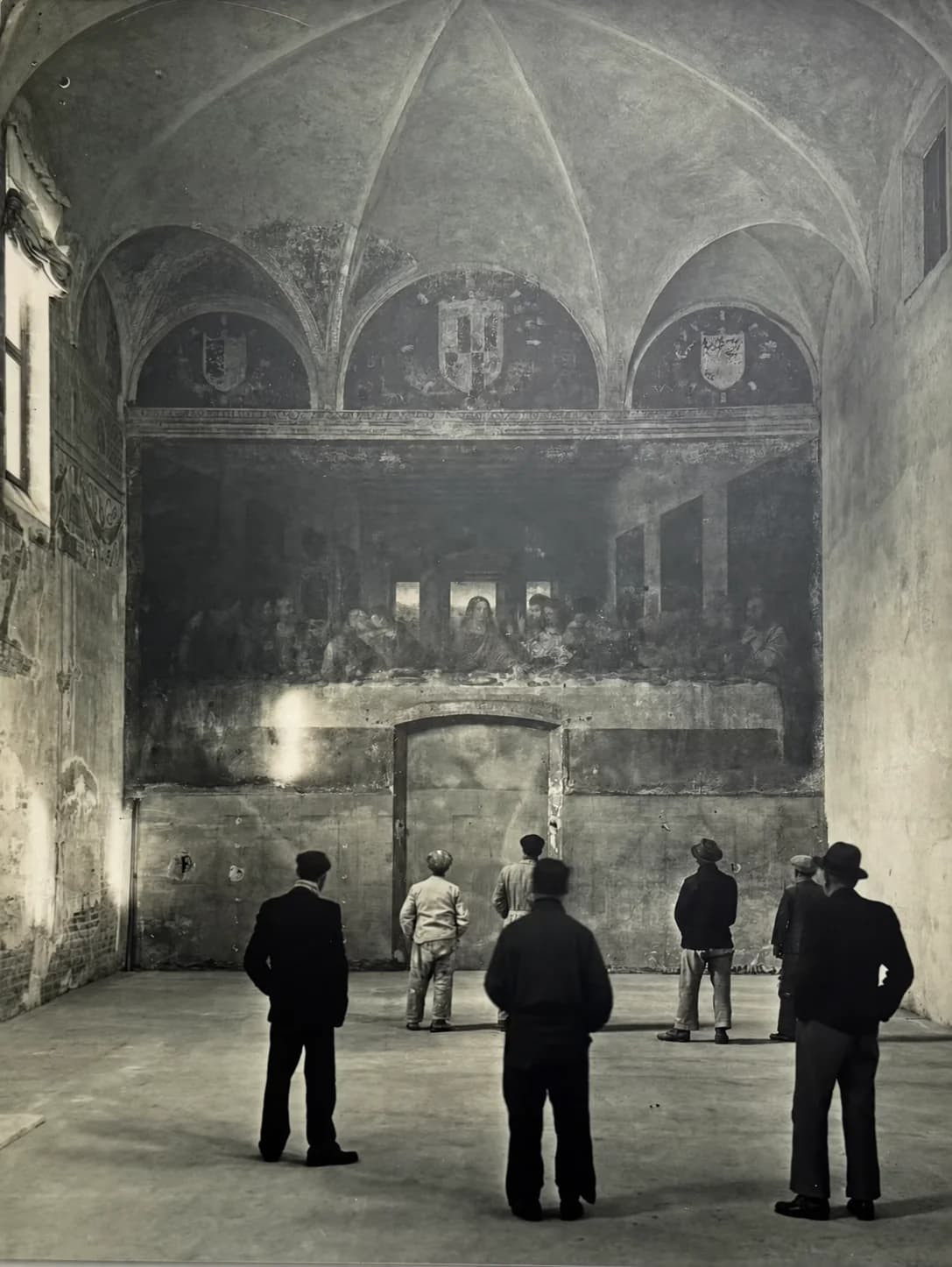
Ludovico Sforza commissioned Leonardo’s work for the Dominican refectory in the 1490s. Its location matters: this is a painting made for a dining room, rather than a canvas later hung in a gallery.
The museum dates the work to the late 1490s and lists its size as about 4.6 by 8.8 metres. Imagine that width around you when studying a small reproduction.
Why does the surface look so fragile?
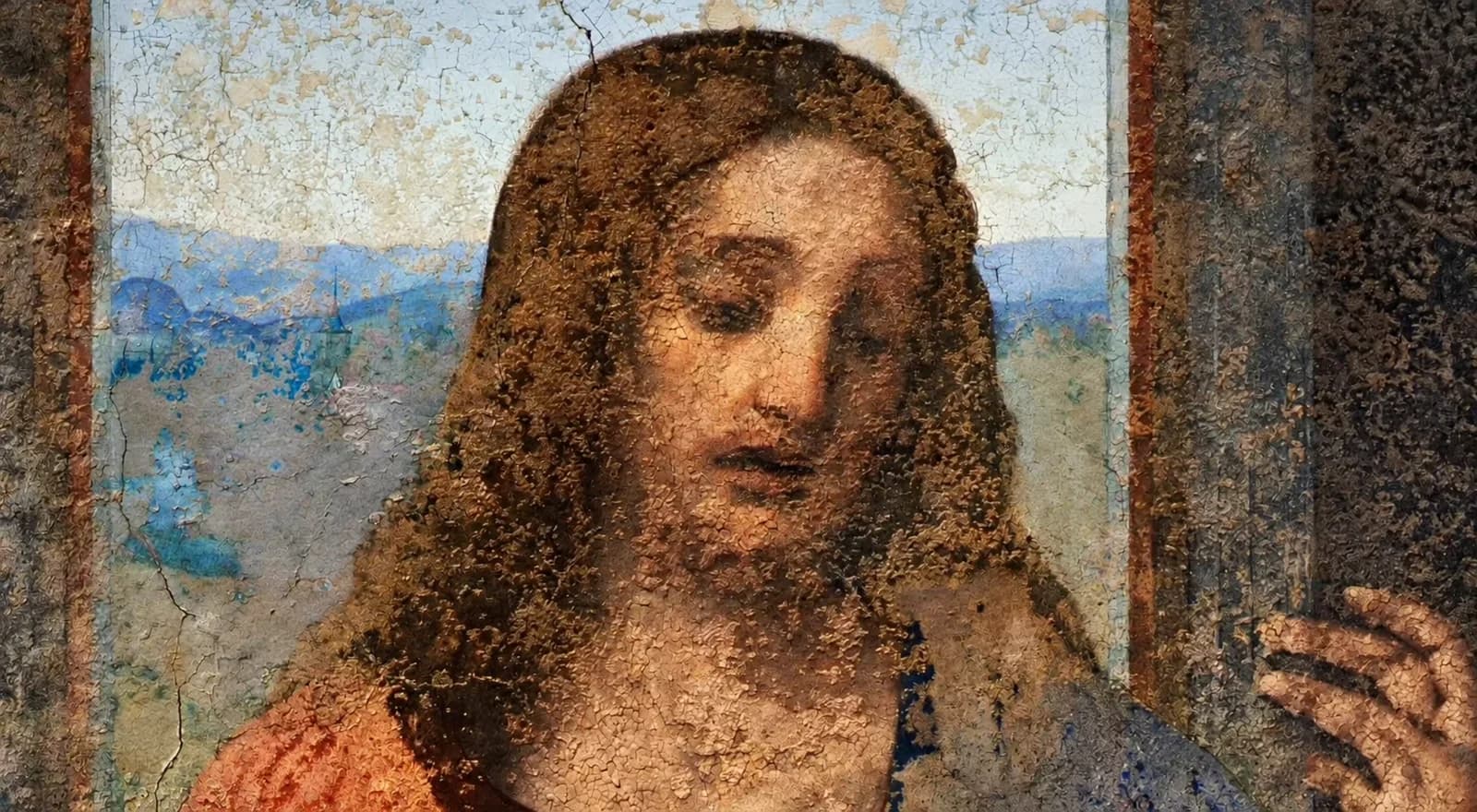
Leonardo worked on a dry wall preparation rather than using the conventional wet-plaster fresco method. The choice supported slow revisions but left a vulnerable surface.
Centuries of damage and restoration are part of what you see today. The major restoration completed in 1999 was followed by continuing preventive care; the museum’s controlled viewing environment is part of that work.
A simple way to look during your visit
First take in the whole wall. Then choose one cluster and compare three reactions. Return to Jesus, look at the perspective, and finally turn towards Montorfano’s Crucifixion on the opposite wall.
This is a suggested viewing sequence, not a museum rule. Learn the names beforehand, but leave yourself time to notice something you did not expect. The visitor guide covers getting there and preparing for entry.
Plan your journey, arrival and visit →Frequently asked questions
Is the original Last Supper in Milan?
Yes. It remains in the former refectory of Santa Maria delle Grazie, within the Cenacolo Vinciano Museum.
How many people are in the painting?
Jesus and twelve apostles: thirteen figures in all.
Is The Last Supper a fresco?
It is a mural, but Leonardo did not use the conventional wet-plaster fresco technique. The museum describes it as dry wall-painting.
What are Il Cenacolo and L’Ultima Cena?
These Italian names refer to Leonardo’s Last Supper. For a visit in Milan, look for the Museo del Cenacolo Vinciano, in the former refectory of Santa Maria delle Grazie.
Sources & further reading
Compiled by Book Last Supper. Check current museum announcements for changes to reservations and visiting arrangements.